
A good Raspberry Pi case does more than protect the board. The right enclosure can improve cooling, storage, cable management, GPIO access, mounting options, and overall usability.
This is especially important with the Raspberry Pi 5, which benefits from active cooling under sustained workloads. Raspberry Pi officially recommends active cooling options for maximum performance, including its Active Cooler and official Raspberry Pi 5 Case.
In this guide, we compare the best Raspberry Pi cases in 2026 for different types of builds, including home servers, NAS systems, media centers, desktop setups, and high-performance Raspberry Pi 5 projects.
Best Raspberry Pi Cases at a Glance
| Case | Best For | Cooling | NVMe | HAT Support |
|---|---|---|---|---|
| Argon ONE V3 M.2 NVMe | Best overall | Active + passive | Yes | Limited |
| Official Raspberry Pi 5 Case | Best value | Active | No | Yes |
| FLIRC Raspberry Pi 5 Case | Silent builds | Passive | No | Limited |
| Pironman 5 MAX | Power users | Active | 2× | Yes |
| Argon ONE V3 | Desktop/media center | Active + passive | Optional | Limited |
| Waveshare PI5-CASE-H | Budget cooling | Active | No | Limited |
| Waveshare PI5-CASE-D | HAT/industrial projects | Depends on cooler | Via HAT | Excellent |
Our overall pick: Argon ONE V3 M.2 NVMe
Best inexpensive option: Official Raspberry Pi 5 Case
Best silent option: FLIRC Raspberry Pi 5 Case
Best high-performance enclosure: Pironman 5 MAX
1. Argon ONE V3 M.2 NVMe — Best Overall Raspberry Pi 5 Case
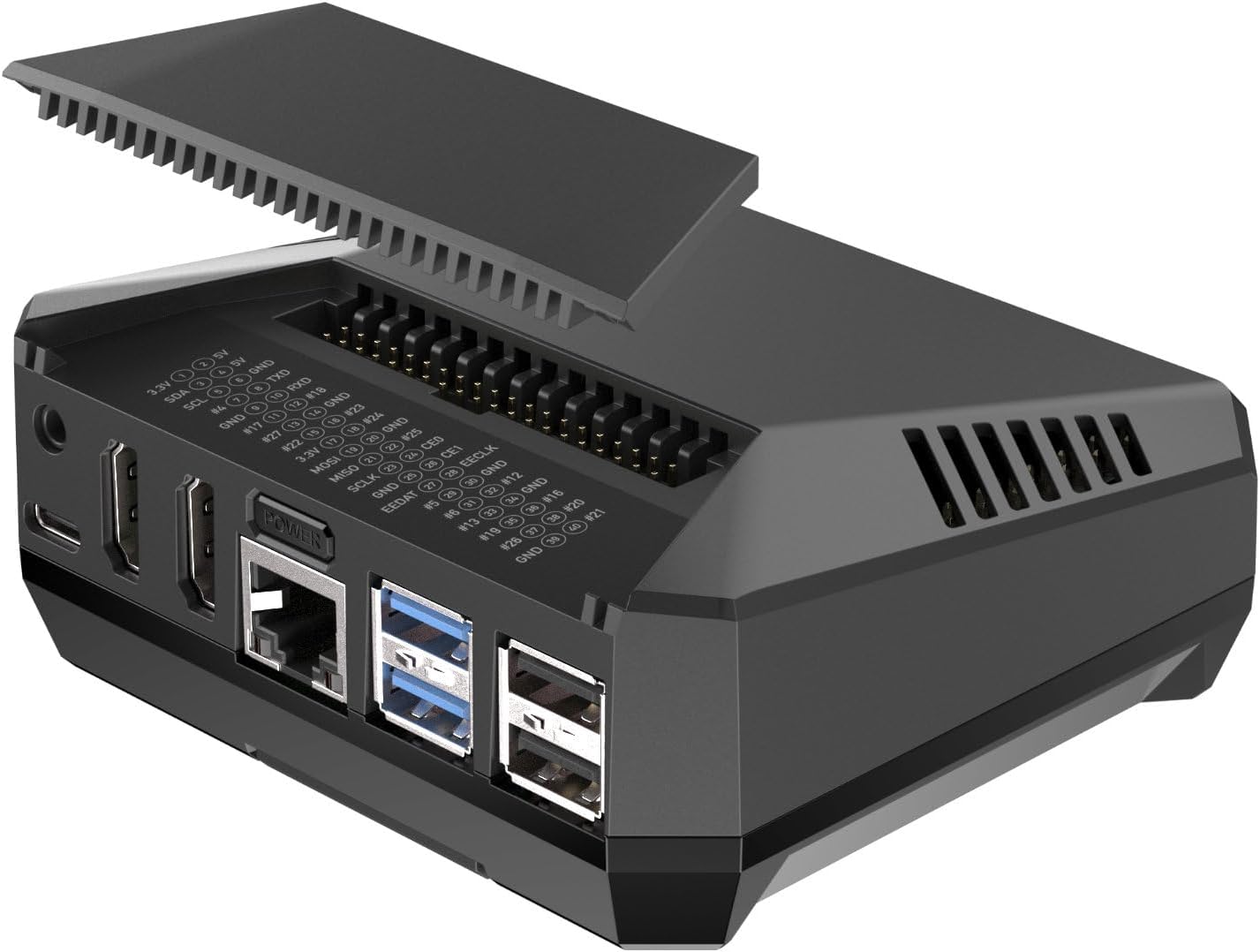
If you want a Raspberry Pi 5 case that can turn the board into something much closer to a compact desktop or home server, the Argon ONE V3 M.2 NVMe is one of the strongest options.
It combines an aluminum enclosure, active cooling, additional heatsinking, a power button, expanded connectivity, and an integrated M.2 NVMe expansion board.
The case supports M-Key NVMe drives up to 2280 size and connects the storage through the Raspberry Pi 5’s PCIe interface. It also includes a heatsink for the NVMe drive.
Key features
- Aluminum construction
- Built-in 30mm PWM blower
- NVMe support
- M.2 M-Key up to 2280
- Integrated NVMe heatsink
- Power button
- Full-size HDMI connectivity
- 3.5mm audio support via optional DAC
- RP2040 controller
- Raspberry Pi 5 compatibility
The Raspberry Pi Official Magazine’s testing found that the case kept the Pi 5 below the temperature at which performance throttling begins during its stress testing.
Best for
- Home servers
- Docker
- NAS projects
- Desktop replacements
- Media centers
- NVMe storage
- 24/7 Raspberry Pi servers
Downsides
The Argon ONE V3 M.2 is considerably more expensive than a basic protective case, and its additional hardware makes installation more complicated.
Verdict
Best overall Raspberry Pi 5 case for users who want storage, cooling, and a more complete computer-like enclosure.
2. Official Raspberry Pi 5 Case — Best Value
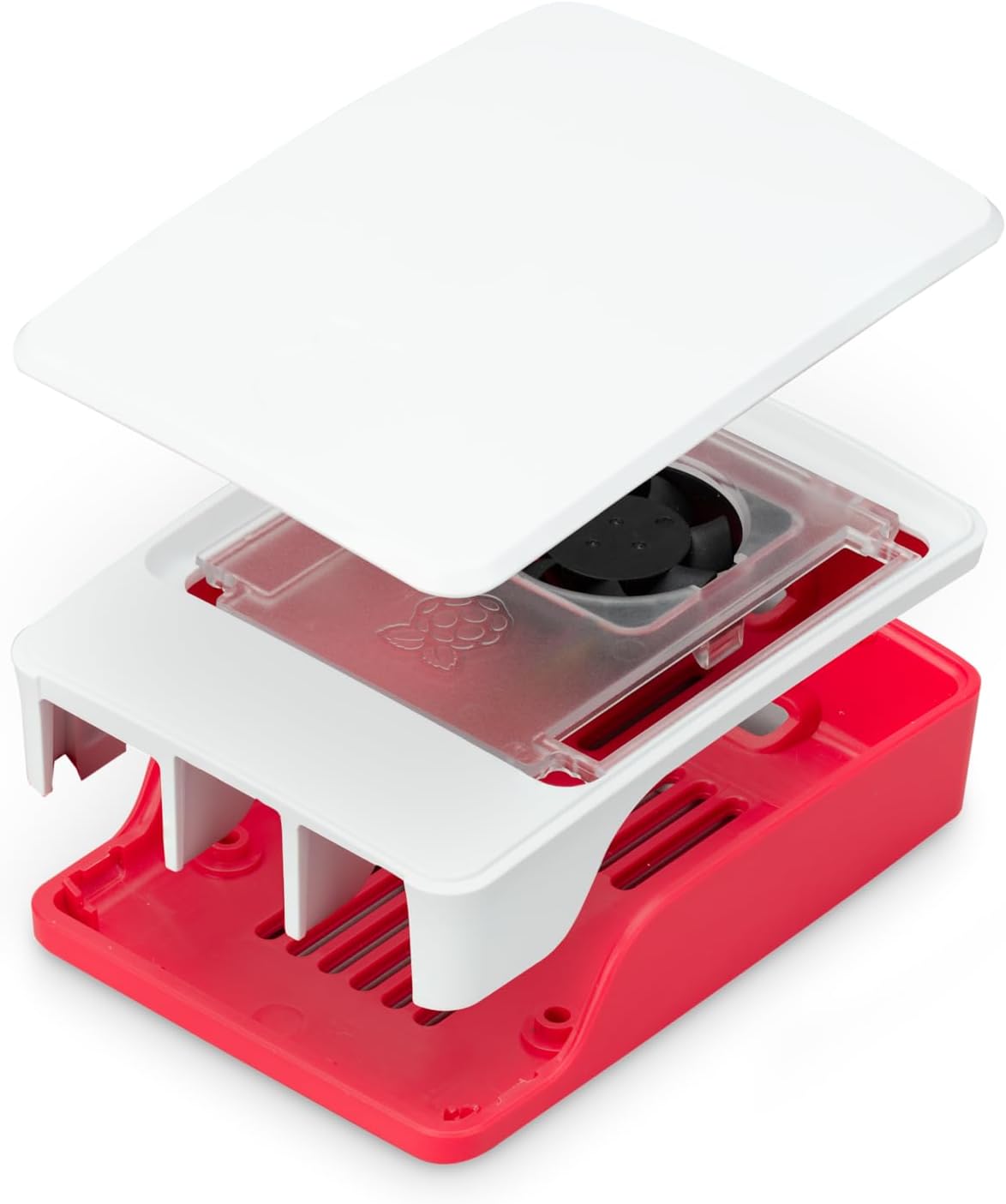
The official Raspberry Pi 5 Case is difficult to beat when you simply want an inexpensive, well-designed enclosure that fits the board properly.
It uses a four-piece clip-together design with an integrated temperature-controlled fan and a small processor heatsink.
Key features
- Official Raspberry Pi design
- Integrated fan
- Processor heatsink
- GPIO access
- Removable lid
- HAT mounting support with appropriate spacers/extensions
- Stackable design
- Silicone feet
- Excellent port access
The integrated fan connects directly to the Raspberry Pi 5’s four-pin fan connector and is controlled using PWM. Raspberry Pi lists maximum airflow at 2.79 CFM and maximum fan speed at 8,000 RPM.
The official case is also designed so the lid can be removed to expose the GPIO header and fan area.
Best for
- Beginners
- Desktop Raspberry Pi
- Basic home servers
- Programming
- General-purpose projects
- HAT experimentation
Downsides
It doesn’t provide built-in NVMe storage or the expanded desktop-style connectivity found on premium cases.
Verdict
The best choice if you want a simple, inexpensive and official Raspberry Pi 5 enclosure.
3. FLIRC Raspberry Pi 5 Case — Best Silent Case
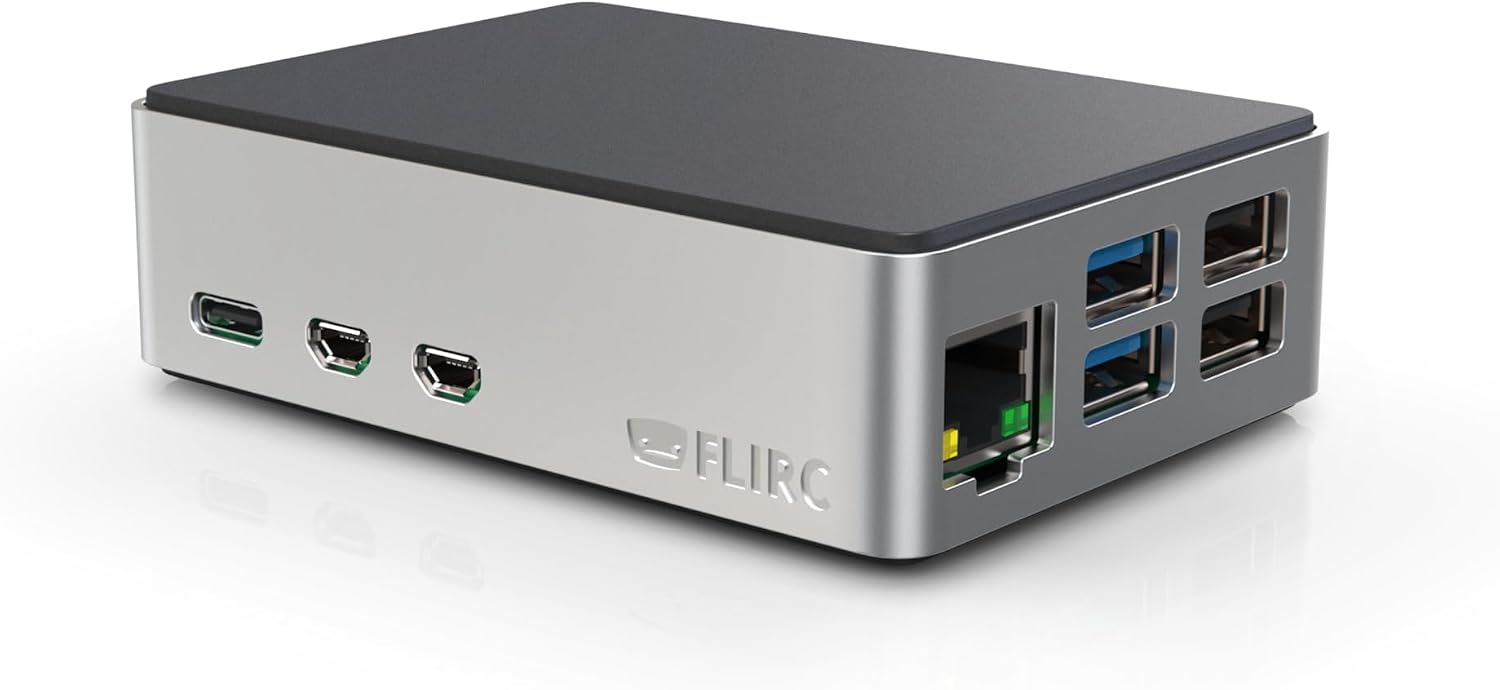
If silence is more important than maximum cooling, the FLIRC Raspberry Pi 5 Case is worth considering.
FLIRC’s Raspberry Pi cases use an aluminum enclosure that acts as part of the thermal solution, making the design particularly attractive for users who don’t want a fan constantly running.
FLIRC currently lists its Raspberry Pi 5 Case alongside other Raspberry Pi cases, including a Kodi Edition.
Best for
- Media centers
- Desktop use
- Living rooms
- Quiet offices
- Kodi
- Retro gaming
Advantages
- Fanless design
- Minimalist appearance
- Aluminum construction
- Compact
- Good protection
- No fan noise
Downsides
A passive case isn’t necessarily the best option for sustained maximum CPU workloads.
Raspberry Pi’s own documentation notes that a heatsink or fan can reduce thermal throttling and improve performance, particularly under heavier workloads.
Verdict
One of the best Raspberry Pi cases for a quiet media center or desktop system.
4. Pironman 5 MAX — Best for Power Users
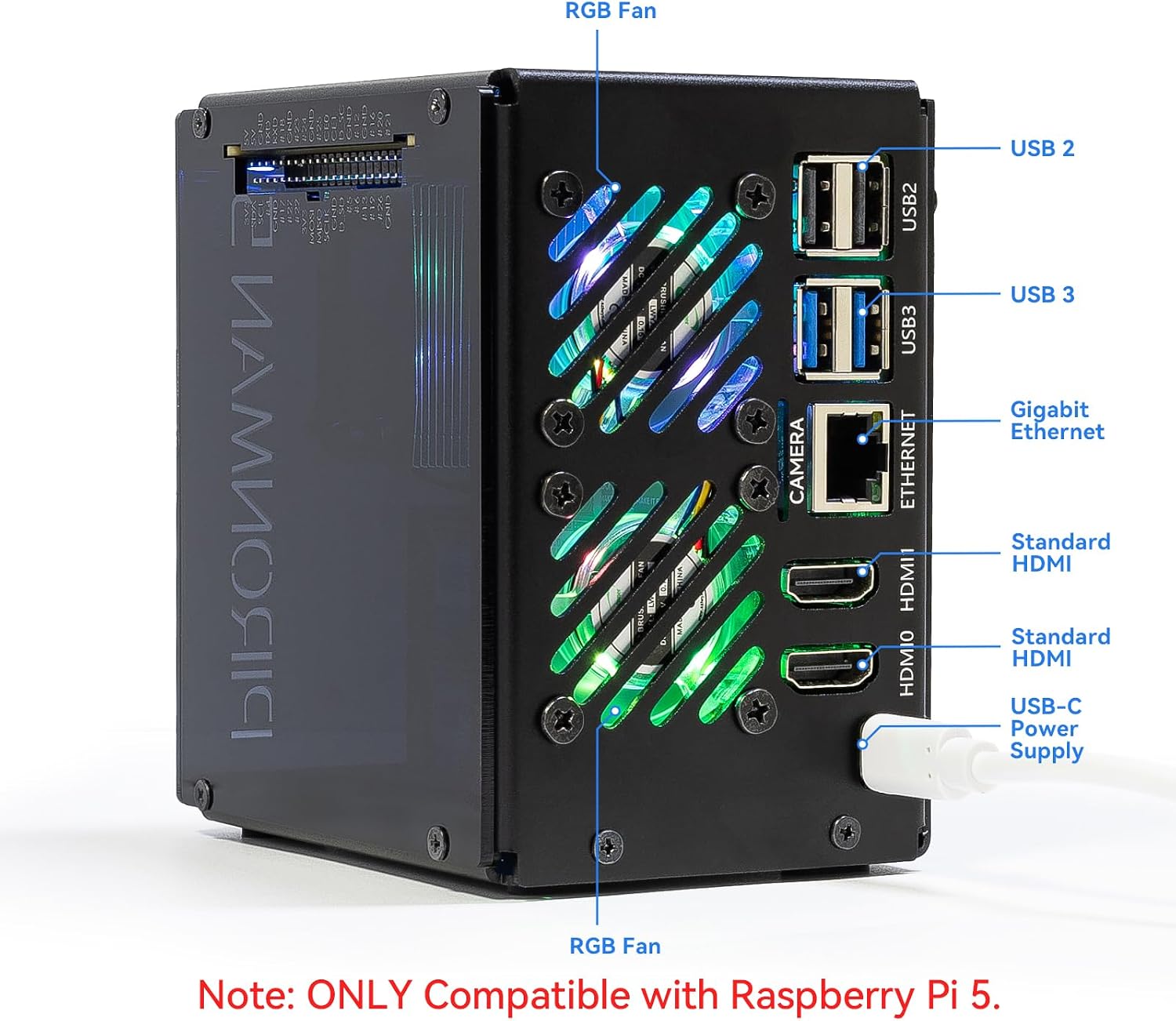
The SunFounder Pironman 5 MAX is not just a protective case. It transforms the Raspberry Pi 5 into a much more elaborate mini-PC/server platform.
It includes:
- Dual M.2 NVMe slots
- PCIe Gen 2 switch
- RAID 0/1 support
- AI accelerator support
- Tower cooler
- Two RGB fans
- OLED display
- Full-size HDMI ports
- Power button
- IR receiver
- GPIO expansion
SunFounder lists compatibility with Raspberry Pi 5 models from 2GB through 16GB.
The official documentation says the Pironman 5 MAX supports two M.2 M-Key slots for 2230, 2242, 2260 and 2280 devices, including configurations using NVMe drives or AI accelerators.
Best for
- NAS
- Docker servers
- AI projects
- Home Assistant
- Media servers
- Advanced Raspberry Pi projects
- Multiple NVMe drives
Cooling
The Pironman 5 MAX uses a tower-style cooler plus additional fans. SunFounder’s documentation specifically positions it for high-performance workloads and reports very low temperatures in its own testing configuration.
Downsides
It’s much larger and more expensive than a normal Raspberry Pi case.
If all you want is a small enclosure for Pi-hole, there’s little reason to buy something this elaborate.
Verdict
The best Raspberry Pi 5 case for enthusiasts who want storage, cooling and expansion rather than just protection.
5. Argon ONE V3 — Best Desktop-Style Case
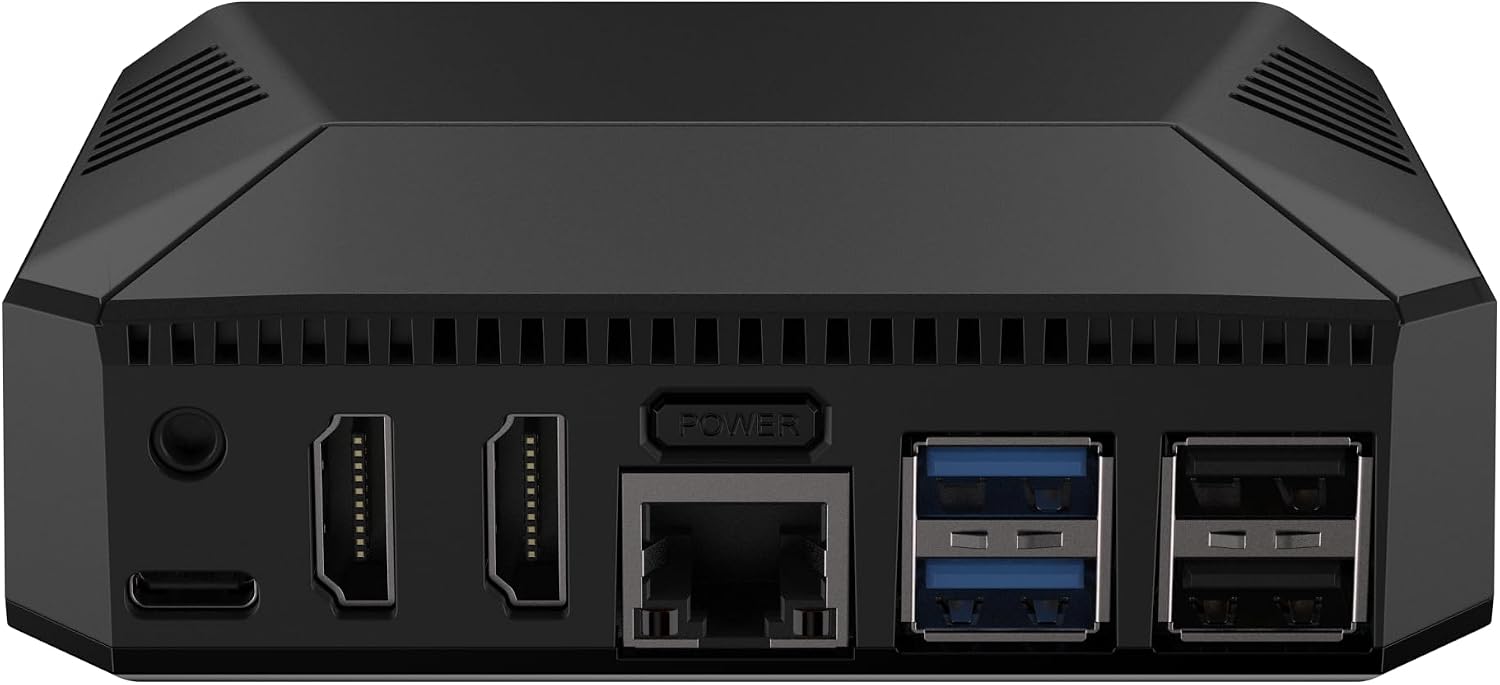
If you like the Argon ONE concept but don’t need integrated NVMe storage, the standard Argon ONE V3 is a more straightforward option.
The aluminum case includes an integrated IR receiver and is designed to make the Raspberry Pi 5 more suitable as a desktop or media-center computer.
The separate M.2 version adds the NVMe expansion functionality.
Best for
- Desktop Raspberry Pi
- Media centers
- Retro gaming
- Living-room computers
- General-purpose Pi 5 systems
Advantages
- Premium aluminum enclosure
- Integrated cooling
- Power management
- IR receiver
- Clean cable arrangement
- Optional audio expansion
Verdict
A great choice if you want the Raspberry Pi 5 to look more like a finished computer than a development board.
6. Waveshare PI5-CASE-H — Best Budget Aluminum Cooling Case
For users who mainly care about cooling and don’t need NVMe integration, Waveshare’s PI5-CASE-H is an interesting inexpensive option.
It combines an aluminum case with a temperature-controlled blower fan and thermal pads.
Best for
- Raspberry Pi 5 servers
- Docker
- Compiling
- Development
- Budget builds
- Sustained workloads
Advantages
- Aluminum construction
- Active cooling
- Compact
- Low cost
- Easy installation
- Precise port cutouts
Downsides
It doesn’t offer the integrated storage and desktop-oriented features found in premium cases.
Verdict
A good inexpensive choice when cooling is the priority.
7. Waveshare PI5-CASE-D — Best for HATs and Industrial Projects
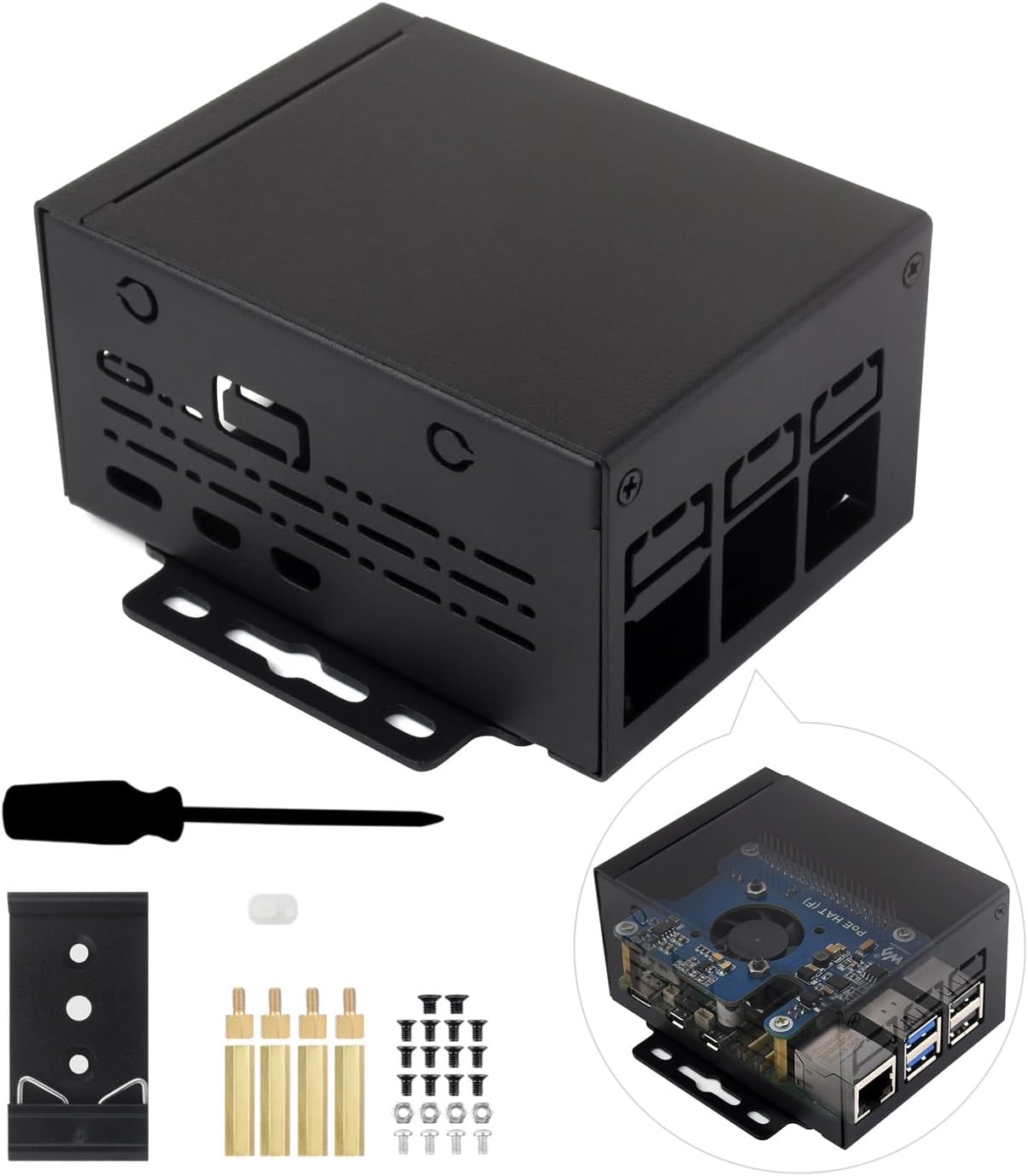
The PI5-CASE-D takes a different approach.
Instead of trying to turn the Raspberry Pi into a miniature desktop computer, it provides additional internal space for expansion boards and supports wall mounting and 35mm DIN-rail mounting.
This makes it particularly interesting for:
- Home automation
- Industrial projects
- Network equipment
- Raspberry Pi controllers
- HAT-based projects
- DIN-rail installations
The case can accommodate a wide variety of Raspberry Pi 5 HATs and expansion boards, including several PCIe, M.2 and networking accessories.
Verdict
The best case here for industrial, automation and HAT-heavy Raspberry Pi 5 projects.
Raspberry Pi 5 Case Comparison
| Case | Material | Cooling | NVMe | Power Button | HAT Friendly | Best Use |
|---|---|---|---|---|---|---|
| Argon ONE V3 M.2 | Aluminum | Active + passive | ✅ | ✅ | ⚠️ | Home server |
| Official Pi 5 Case | ABS/PC | Active | ❌ | — | ✅ | General use |
| FLIRC Pi 5 | Aluminum | Passive | ❌ | — | ⚠️ | Silent systems |
| Pironman 5 MAX | Aluminum | Active | ✅✅ | ✅ | ✅ | NAS/AI |
| Argon ONE V3 | Aluminum | Active + passive | Optional | ✅ | ⚠️ | Desktop/media |
| Waveshare H | Aluminum | Active | ❌ | — | ⚠️ | Budget server |
| Waveshare D | Metal | Optional | Via HAT | ✅ | ✅✅ | Industrial |
What Should You Look for in a Raspberry Pi Case?
Buying the most expensive case isn’t necessarily the best decision.
Consider these factors first.
1. Cooling
For Raspberry Pi 5, cooling is one of the most important considerations.
The Pi 5 can operate without active cooling under typical workloads, but sustained heavy workloads can benefit from active cooling. Raspberry Pi specifically recommends active cooling solutions when maximum performance is required.
For:
- Docker
- compiling
- AI
- databases
- NAS
- video processing
choose a case with good active cooling.
For:
- Pi-hole
- lightweight web servers
- basic coding
- simple automation
a passive case can make more sense.
2. NVMe Support
If you’re building a Raspberry Pi home server, NVMe support can be extremely useful.
A case such as the Argon ONE V3 M.2 integrates the M.2 storage into the enclosure.
The Pironman 5 MAX goes even further with two M.2 slots and RAID configurations.
For a Docker server, an NVMe-equipped case can be especially attractive because Docker images, databases and application data can live on faster storage.
See our guide:
Docker Containers for Raspberry Pi
3. GPIO Access
If you’re using:
- sensors
- displays
- HATs
- cameras
- robotics hardware
- automation boards
make sure the case doesn’t obstruct the GPIO header.
The official Raspberry Pi 5 Case provides access to the GPIO area, while some larger enclosures provide dedicated GPIO extensions.
4. Port Access
A good case should make it easy to reach:
- USB
- Ethernet
- USB-C power
- HDMI
- microSD
- GPIO
- camera connectors
- display connectors
Premium cases sometimes move or convert connectors.
For example, the Pironman 5 MAX provides standard HDMI ports rather than Raspberry Pi 5’s native micro-HDMI connectors.
5. Storage Expansion
If you’re building a server, think beyond the case itself.
You may eventually want:
Raspberry Pi 5
      │
      ├── NVMe SSD
      ├── USB SSD
      └── NAS storage
A case with integrated NVMe support can simplify the build considerably.
6. Size
A small case is ideal for:
- travel
- desktop use
- Pi-hole
- basic development
A larger case can be better for:
- NAS
- multiple drives
- HATs
- AI accelerators
- cooling
- industrial mounting
Don’t choose a huge case if you only need a simple Raspberry Pi.
Best Raspberry Pi Case by Use Case
🏆 Best Overall
Argon ONE V3 M.2 NVMe
Best balance of cooling, storage, construction and functionality.
💰 Best Budget
Official Raspberry Pi 5 Case
Simple, affordable and well designed.
🤫 Best Silent
FLIRC Raspberry Pi 5 Case
Best choice when eliminating fan noise is important.
🖥️ Best Desktop Case
Argon ONE V3
Excellent for turning Pi 5 into a compact desktop or media computer.
🗄️ Best NAS Case
Pironman 5 MAX
Dual NVMe support and extensive cooling make it particularly interesting for storage projects.
🤖 Best AI/Expansion Case
Pironman 5 MAX
Its dual M.2 architecture can accommodate NVMe drives and compatible AI accelerators.
🏭 Best Industrial Case
Waveshare PI5-CASE-D
Wall and DIN-rail mounting plus extensive HAT compatibility make it a strong choice for automation projects.
🌡️ Best Cheap Cooling Case
Waveshare PI5-CASE-H
An aluminum enclosure with a temperature-controlled blower at a relatively low price.
Raspberry Pi 4 vs Raspberry Pi 5 Cases
Be careful when buying a case because Raspberry Pi 4 and Raspberry Pi 5 cases are not interchangeable.
The Raspberry Pi 5 changed the board layout and introduced a dedicated four-pin fan connector, among other changes.
The official Raspberry Pi accessory lineup includes separate cases for Raspberry Pi 4, Raspberry Pi 5 and Raspberry Pi Zero models.
Always verify the exact board compatibility before purchasing.
Do You Need a Fan for Raspberry Pi 5?
Not always.
Raspberry Pi’s documentation explains that heatsinks aren’t required to prevent damage because the SoC has built-in thermal throttling, but cooling can reduce thermal throttling and improve performance.
A useful rule is:
| Workload | Recommended Cooling |
|---|---|
| Pi-hole | Passive |
| Basic Linux desktop | Passive/active |
| Retro gaming | Active |
| Docker | Active preferred |
| Home server | Active preferred |
| NAS | Active |
| AI | Active |
| Compiling | Active |
| Long CPU workloads | Active |
For a Pi-hole server, spending heavily on cooling is unnecessary.
For a Raspberry Pi 5 running Docker, Nextcloud, Jellyfin and other services 24/7, active cooling is much more sensible.
Our Recommendation for a Raspberry Pi Home Server
For the type of Raspberry Pi home-server projects covered on this site, I’d choose the Argon ONE V3 M.2 NVMe.
A practical setup would be:
Raspberry Pi 5
       │
       ▼
Argon ONE V3 M.2
       │
       ├── NVMe SSD
       │
       ├── Active cooling
       │
       ├── Ethernet
       │
       └── Docker
             ├── Pi-hole
             ├── Jellyfin
             ├── Nextcloud
             ├── Portainer
             └── Uptime Kuma
That turns the Raspberry Pi 5 into a compact, quiet and relatively powerful home server.
If you don’t need NVMe, save money and choose the official Raspberry Pi 5 Case instead.
Final Verdict
The best Raspberry Pi case depends heavily on what you’re building.
For most Raspberry Pi 5 users, Argon ONE V3 M.2 NVMe is the most complete option because it combines an aluminum enclosure, active cooling, NVMe storage and useful desktop/server features.
For beginners and simple projects, the official Raspberry Pi 5 Case is the better value. It provides active cooling, GPIO access and a clean design without adding unnecessary complexity.
For enthusiasts building a NAS or AI system, the Pironman 5 MAX is the most expandable option, with dual NVMe support, extensive cooling and AI accelerator compatibility.
And if silence is your priority, a fanless aluminum case such as the FLIRC Raspberry Pi 5 Case remains an attractive alternative.
Frequently Asked Questions
What is the best Raspberry Pi case in 2026?
For Raspberry Pi 5, the Argon ONE V3 M.2 NVMe is our overall pick because it combines cooling, aluminum construction, NVMe storage and additional connectivity.
Does Raspberry Pi 5 need a case?
No. The Raspberry Pi 5 can operate without a case, but a case protects the board and can improve cooling and usability.
Does a Raspberry Pi 5 case need a fan?
Not necessarily. Raspberry Pi 5 can operate without active cooling for typical workloads, but active cooling is recommended for sustained heavy workloads where thermal throttling could reduce performance.
What is the best Raspberry Pi case for a home server?
The Argon ONE V3 M.2 NVMe is an excellent choice because it combines active cooling and integrated NVMe storage.
What is the best Raspberry Pi case for NAS?
For a high-performance Raspberry Pi 5 NAS, the Pironman 5 MAX is particularly interesting because it supports two NVMe drives and RAID 0/1 configurations.
What is the best cheap Raspberry Pi 5 case?
The official Raspberry Pi 5 Case is our preferred budget option because it includes active cooling and is designed specifically for the Pi 5.
Can I use a Raspberry Pi 4 case on Raspberry Pi 5?
No. Buy a case specifically designed for your Raspberry Pi model.
Can a Raspberry Pi case support HATs?
Some can. The official Raspberry Pi 5 Case supports HAT mounting with appropriate stand-offs and GPIO header extensions, while cases such as the Waveshare PI5-CASE-D are specifically designed around HAT and expansion-board compatibility.
Recommended links
- Docker Containers for Raspberry Pi
- Install Portainer on Raspberry Pi
- Install Pi-hole on Raspberry Pi
- Install Jellyfin on Raspberry Pi
- Install Nextcloud on Raspberry Pi
- Install Tailscale on Raspberry Pi
- Raspberry Pi VPN Server with WireGuard
- Best Single Board Computers for Home Servers
- Top 10 Single Board Computers in 2026
- Single Board Computer Comparison List